Late Autism Diagnosis in Adults
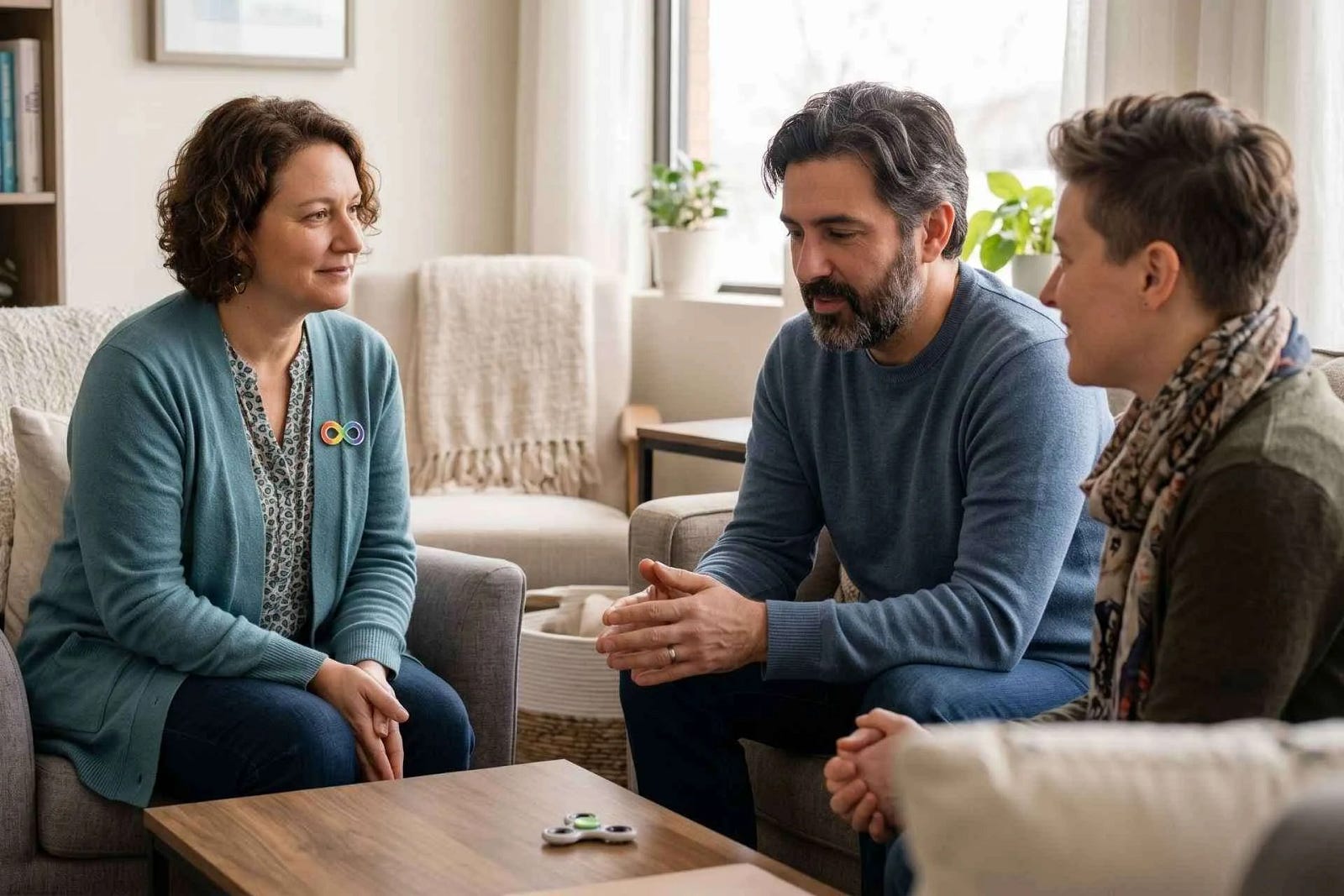
A delicate practice that every therapist takes part in is creating a safe and welcoming therapeutic environment for their clients to explore themselves. This is especially true for neurodiverse clients. Autism has become a bit of a buzz word online, but this increased attention on the diagnosis has led to many adults seeking a diagnosis for symptoms they have experienced throughout their whole lives. As neurodiverse individuals who were unaware of their diagnoses until later in life, both writers can speak to the difficulty of the transition from ignoring one’s needs to try and fit in, to accepting the differences and working with them. While this may not be true for everyone, it is a common theme we have noticed among the many different late diagnosed autistic adults we have worked with.
Autism has become more prevalent, not just online, but in research as well. Research has pivoted to more focus on different presentations, intersectionality, comorbidities (diagnoses that often are diagnosed alongside another), and misdiagnosis of symptoms (Simcoe et al., 2022). One of the most impactful areas of difficulty surrounding diagnosis of autism is the historical representation of and inclusion of assigned-female-at-birth (AFAB) individuals and other gender identities (i.e. nonbinary, agender, transgender, etc.; D’Mello et al., 2022). One group of researchers examined over 1,400 studies on how the brain functions and differences in the brain’s structure for autistic folks, and of those studies, 434 studies used only assigned-male-at-birth (AMAB) samples and only 4 featured AFAB-only samples (D’Mello et al., 2022). AFAB autistics tend to have a harder time getting diagnosed due to the lack of representation and inclusion in autism research, which impacts how diagnostic criteria are developed (D’Mello et al., 2022). This leads to both a biased understanding of what autism is and looks like and difficulty accessing support services for any non-male-identifying autistics (i.e. AFAB autistics and gender diverse autistics; D’Mello et al., 2022). Because of this historical lack of inclusion, autism has been more frequently diagnosed in cisgender male clients, so many clients of other genders have looked into getting evaluated at older ages because their experiences are not represented well in existing diagnostic criteria or research (D’Mello et al., 2022; Simcoe et al., 2022). Different presentations of autism are often categorized as “male” and “female” presentations, but both authors believe the differences in presentations relate more to the “spectrum” that is Autism Spectrum Disorder.
Research also highlights an anecdotal overlap between folx with gender dysphoria and autistic folx (Rea et al., 2024). While we cannot say that being autistic makes someone more likely to develop gender dysphoria or that having gender dysphoria makes someone more likely to develop autism, we can highlight that there is an overlap, with some studies saying that 13–15% of autistic folx identify as transgender, gender diverse, or as experiencing gender dysphoria (Rea et al., 2024; Simcoe et al., 2022), Given the complexity of gender identity, autism presentation, and the impact of non-inclusive research and diagnostic criteria, both authors find discomfort in referring to presentation of symptoms based on sex or gender.
However, many of the differences in presentation of autism could also be attributed to the socialization of AFAB individuals. One of the differences in the purported “female” presentation of autism relates to special interests. Behaviors that could be a symptom of autism, like different collections or intense interests, are normalized in young girls or AFAB people (Simcoe et al., 2022). These could include special interests in boy bands, celebrities, or other pop culture phenomenon that may be overlooked as developmentally appropriate (Kalyn, 2024; Simcoe et al., 2022). An important piece of why autism is often overlooked in AFAB folx is the higher rates of masking their symptoms (Simcoe et al., 2022). Masking, or the ability to imitate others in an attempt to fit in with social norms, can present as a greater likelihood of apologizing or appeasing others, which has been found to occur more in women and AFAB people than men due to social norms (Simcoe et al., 2022). Since masking essentially is camouflaging symptoms or “blending in” with others, autistic traits can be missed, especially in childhood. Typically speaking, AFAB individuals are more inclined or pressured to “fit in” socially, which leads to a myriad of masking-related behaviors even for folx who are not autistic such as mimicking socially acceptable behavior and observing those around them for cues on how to act, speak, and express themselves (Kalyn, 2024). This keeps people from getting tested and diagnosed. It may also lead to misdiagnosis of symptoms to different mental health diagnoses such as personality disorders, eating disorders, anxiety, depression, and many more (Simcoe et al., 2022). Consequently, many adults eventually discover their shared symptoms online and then seek a formal diagnosis later in life.
A large focus in the earlier stages of processing autism diagnoses is understanding sensory needs. Brynn has created a variety of videos and blog posts discussing sensory needs due to having found them to be incredibly undervalued and important. An autistic person’s sensory needs are just that — a NEED. Just like food, water, and shelter, meeting one’s sensory equilibrium is something that deserves the attention and care other aspects of self care get.
Sensory fulfillment and regulation are among the key reasons for the restricted and repetitive behaviors (Hazen et al., 2014), often referred to as “stimming” or self-stimulatory behavior, that are part of the diagnostic criteria for autism, such as body rocking or finger tapping. The body’s reaction to overstimulation or sensory overresponsiveness has been correlated with heightened levels of anxiety in autistic people (Hazen et al., 2014). Stimming can be helpful in decreasing those feelings of anxiety as a means of self soothing. In this regard, self-soothing behaviors are important to anxiety management, stress reduction, and general emotional regulation in autistic folks. However, many late diagnosed autistic adults have been trained not to stim or to suppress this need due to social pressure or punishments. People, unknowingly or not, telling neurodiverse folks to stop shaking their legs, clicking pens, or other self-soothing behaviors discourages them over time. Often, the later an individual receives their autism diagnosis, the more ingrained the societal expectation to suppress sensory needs becomes, making it a challenging habit to unlearn.
Sensory dysregulation, whether manifesting as overstimulation or understimulation, significantly impacts the mental health of neurodiverse folks, extending beyond anxiety. It can lead to depression symptoms or general withdrawal as well (Hazen et al., 2014). From the perspective of polyvagal theory, our brains and bodies are connected by the autonomic nervous system, which controls the automatic bodily functions, like digestion, heartrate, and breathing (Lacroix, 2024). Stress, anxiety, depression, or other forms of emotional dysregulation can throw the nervous system out of whack, sending the body into fight or flight or a shut down that causes physical distress (Lacroix, 2024). So, the increased GI concerns in autistic individuals (Hazen et al., 2014) makes sense when considering the correlation between heightened sensory and emotional dysregulation. This is why sensory regulation is one of the biggest areas of skill building to encourage late-diagnosed autistic adult clients to focus on (and why you will see a lot of content from Brynn online bringing awareness to its importance).
Alongside the sensory focus, a general focus on unlearning the societal pressures and stigmas that suppress a neurodiverse person’s needs or comfort is an important part of therapy for late-diagnosed autistic adults. The world tends to cater to the neurotypical or nonautistic view of what is “normal” that encourages masking behaviors that may be perceived as “abnormal” by others. A lot of focus on the autistic experience has historically been from the perspective of family members or those around autistic people rather than autistic people themselves (Turnock et al., 2022), so bringing focus back to autistic folks’ voices is an important part of the therapeutic process. Unfortunately, this includes unlearning self-stigma, or the marginalized person’s continued feelings of inadequacy due to previous negative experiences facing social stigma (Turnock et al., 2022). Vee works with autistic and other neurodiverse folx on building awareness about these social influences and how they can cope with these influences and how to move towards greater authenticity and effective self-care.
“When you’re taught that your feelings or behaviors are ‘wrong’ or ‘too much,’ it’s natural to change yourself to avoid harm or isolation. But those pressures usually exist to keep others comfortable, not to support you. Challenging those messages opens the door for you to show up authentically — without shrinking yourself for anyone.” — Vee Tillotson
Psychoeducation in therapy is a large part of helping late-diagnosed autistic adults understand that their experiences are not as abnormal as they may have been led to believe in the past. Finding community with other autistic adults through clubs, group counseling, or other means can be another great way to target feelings of isolation from self-stigma. Understandably, this may be difficult due to the social concerns that are another part of the diagnostic criterion in autism spectrum disorder. However, work can be done either in counseling or through speech therapy to help improve these areas.
Late-diagnosed autistic adults often arrive at their diagnosis carrying years of misinterpretation of their needs and differences due to the research gap, social stigma, and many other reasons that cannot be encompassed in one post. Many do not have the language needed to understand or explain their needs until later in life. Therapy is an important step in the process of finding comfort in late-diagnosed autistic adults’ sensory needs, self care, and expectations of self. Social experiences for autistic people, though, are rarely simple to cover and may be explored in future blog posts. In late-diagnosed autistic adults, social skills are shaped by masking, societal expectations, and social pressure to fit into systems that were not built with neurodiverse folks in mind. Autism is a complex condition that has a variety of presentations of its symptoms, and thus deserves more than one blog post can offer. This is an area we hope to return to in the future to continue to explore the nuances of the autism spectrum. However, it is important that readers know that the autistic experience, late-diagnosed or not, is important, valid, and real. Autism deserves careful focus in the therapeutic environment, and intentionality in this regard is essential for creating ethical, affirming, and responsive spaces where autistic clients can feel supported after a lifetime of feeling misunderstood.
If you or someone you know is looking for support with symptoms related to Autism or neurodiversity affirming assessments, feel free to reach out to Behavioral Health Clinic at 855.607.8242 or visit BHClinic.com


Comments
Post a Comment